A 7-Year Japan Resident Reveals Japanese Food's Downsides and Hidden Truths
원본 (Korean)
Translation + Context
FT = ForbiddenTome — tap to see Korean slang explained
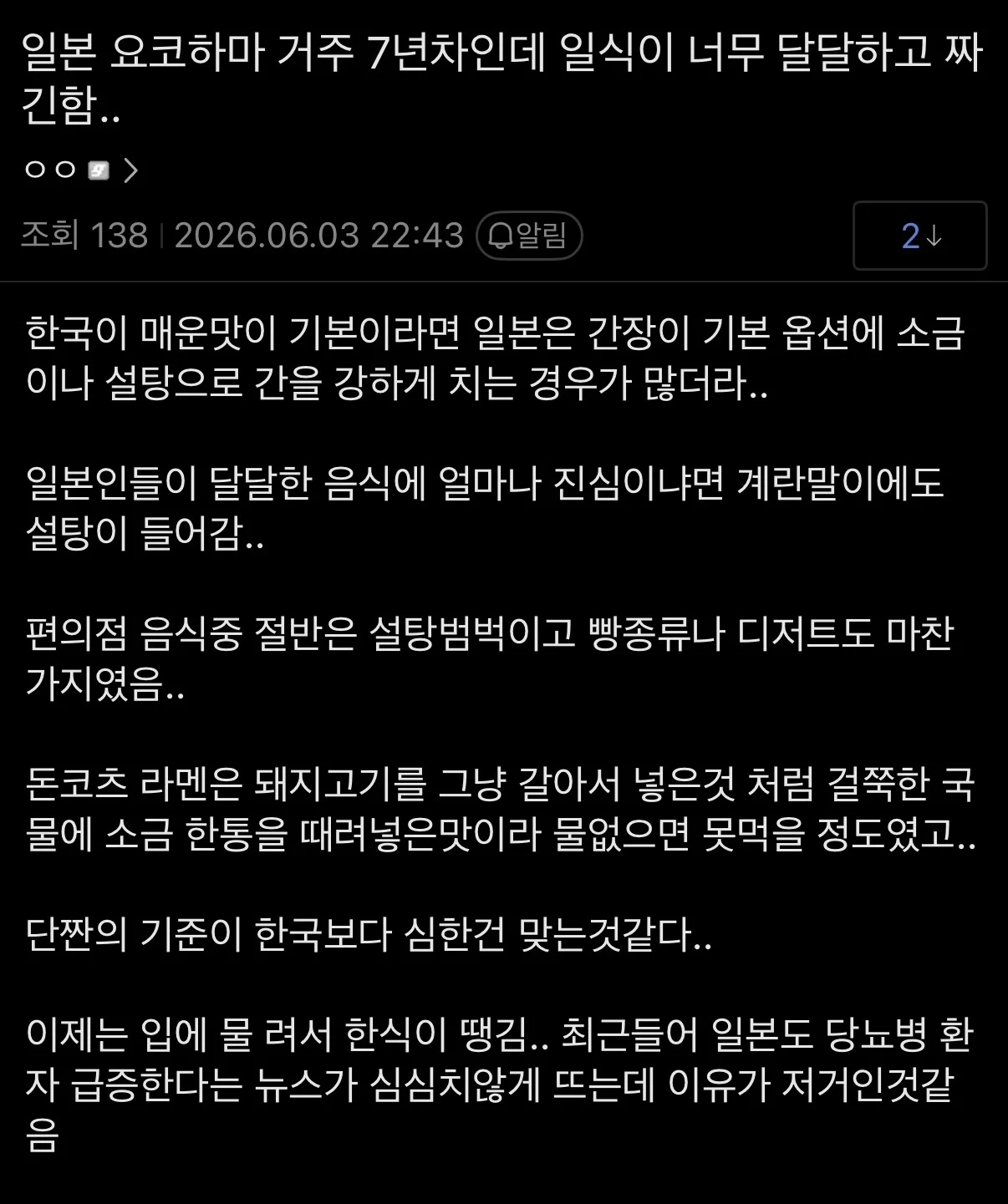
Been living in Yokohama, Japan for 7 years and Japanese food is way too sweet and salty...
If Korea's spicy taste is the default, Japan's default is soy sauce, and they often hit hard with salt or sugar to season things...
Japanese people are so serious about sweet food that even tamagoyaki (rolled omelette) has sugar in it..
Half of convenience store food is just sugar-coated, and bread and desserts were the same..
Tonkotsu ramen tastes like they just ground up pork and threw in a whole jar of salt in thick broth, you literally can't eat it without water..
The sweet-and-salty standard is definitely more extreme than Korea..
Now I'm tired of it and craving Korean food.. Lately there's been no shortage of news about Japan's sudden spike in diabetes patients, and I think that's why lol
Had no idea Japan has so many diabetics either ㄷㄷ.. Is Japanese food really that salty and sweet?
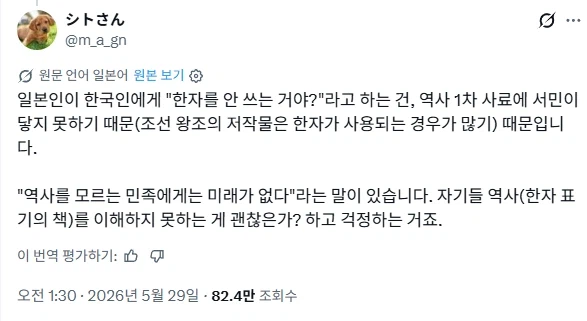
A Japanese Person Explains Why They Keep Pushing Koreans to Use Chinese Characters
81142 months agoby boppydeer525130
A Monk Confesses His Most Embarrassing Moment in Life
130142 months agoby perkycrane527104
Someone Absolutely Unhinged Just Broke Past Ozempic and Mounjaro
11832 months agoby luckyduck553117
Why Cosplayers Look Obedient to Expensive Cameras at weeb Events
6872 months agoby funkywren267571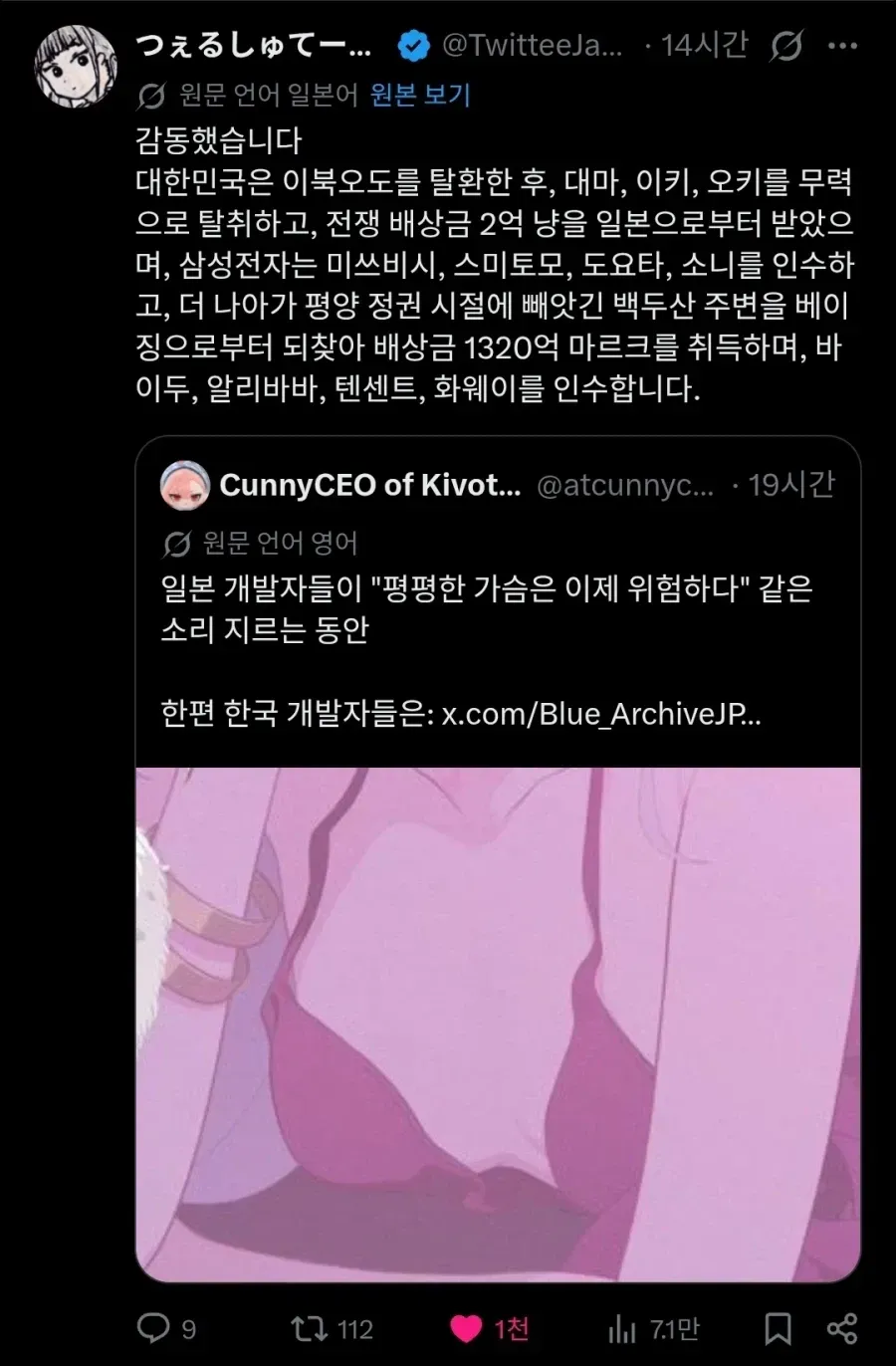
Japanese User Moved by Flat-Chested Illustration
99102 months agoby brightsloth413884
Kim Sae-ui's Current Status: Completely Screwed
87202 months agoby perkycrane527104
The interviewer didn't realize the candidate would become a customer after leaving...
69122 months agoby bubblyhare921328
Advice from 90s-born Koreans to Today's Generation
50122 months agoby sweetbear804068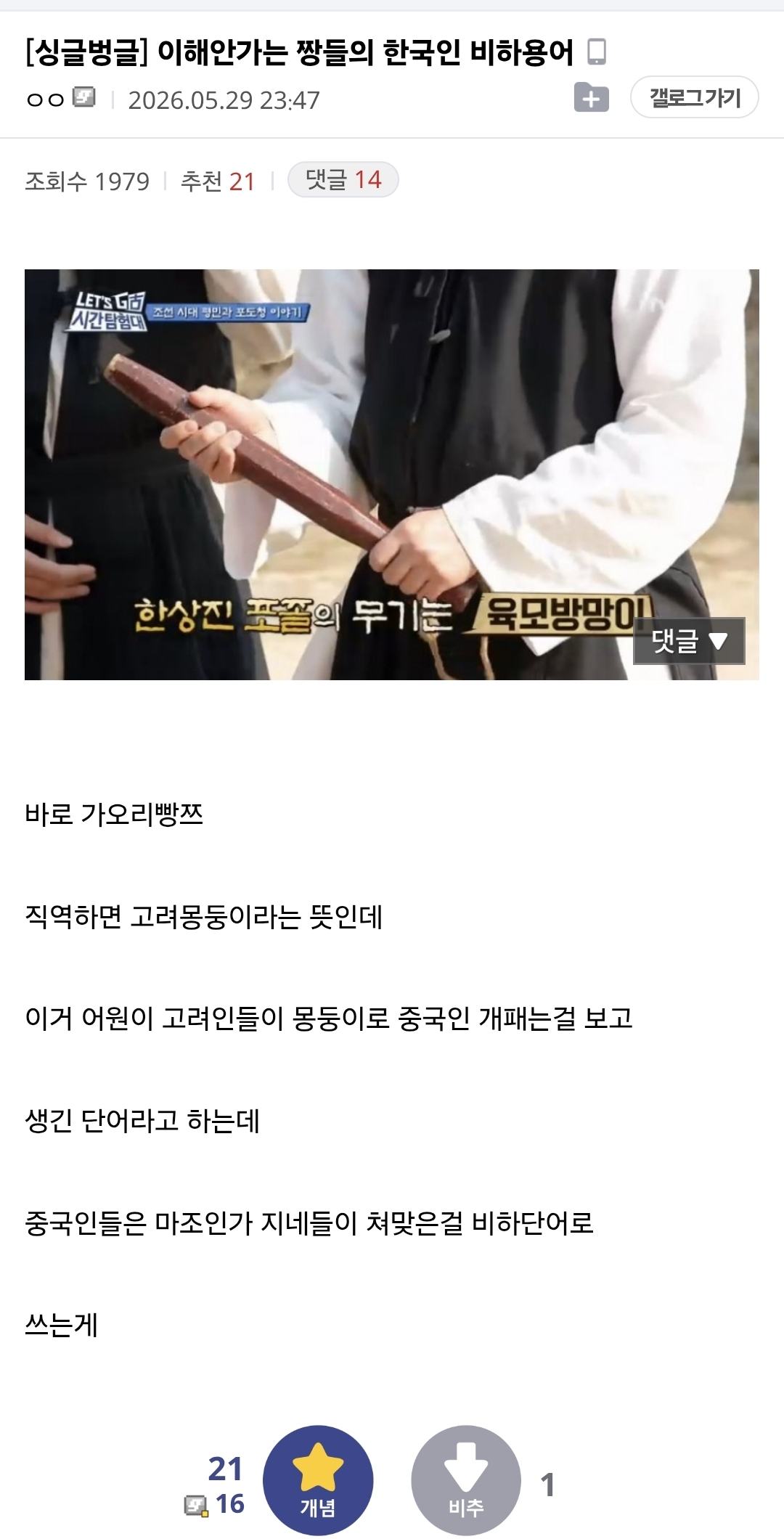
Chinese Slurs Against Koreans That Don't Really Hit
88272 months agoby perkycrane843096
Joo Ho-min's Current Situation.jpg
89242 months agoby peppywren858948
The one ethnic group that firmly believes they're better looking than East Asians...
136152 months agoby zippyowl979254
What's Gross About Teachers
73182 months agoby jollybunny169807
50% of Adult Men Have Experience with Affairs
82132 months agoby bubblyseal228771
Man in His 40s Arrested After Hitting Female Health Center Employee Over Elevator Button Mix-up
116102 months agoby merryotter495433
YouTuber 'Rooster' Kidnapping Murder Attempt... Court Sentences 30 Years Prison
94282 months agoby brightcrow614844
Thought it was worth 6 million won—turned out to be a priceless heirloom
130312 months agoby sparklycat992291
Pemko Operator's Angry Statement on Community Crackdown
103232 months agoby boppycat626550
???: Call of Duty Finally Uses Korea as a Setting
68282 months agoby brightmole349670
Most Annoying Type During Summer
67152 months agoby zippycat918419
Wegovy, Mounjaro Regulation Makes No Sense Lol
60162 months agoby funkyseal327491
7 comments
Facts) When you go traveling and stuff your face with street food snacks, yeah obviously it's gonna be salty, sweet, and ridiculous. But home cooking is totally different—okra salad, grilled fish, shredded cabbage, natto, tofu—nothing like that.
This man really broke the internet's perfect image of Japanese cuisine and honestly? Respect the honesty 🙌
Japan tastes sweet, but Korea got similarly sugary over time too. The difference is Korean food is usually spicy-AND-sweet so you don't notice it as much, while Japanese food is JUST sweet or JUST salty—you pick up on those singular notes. Plus when Japanese food gets greasy, they cover it with saltiness instead of spiciness like Korea does. So the oilier and higher-calorie the dish, the saltier it gets. Think of it this way: Korean food's total combo of spicy+salty+sweet = Japan's saltiness level.
This actually makes so much sense now
Korean food doesn't really use much sugar at the base level. Even simple stuff like gyeran-jjim or gimbap just uses salt seasoning, not sugar dumped in. Japanese cuisine practically reinvented cooking from scratch during modernization, so sugar might be essential there. But Korean recipes are built on a no-sugar foundation, so they can't get that sweet. Baek Jong-won got criticized for using too much sugar, but that's literally standard in Japan.
Baek Jong-won just used what the restaurant industry uses. Later he went full concept mode and overdid it, but early on in Marites he was just using standard restaurant amounts. At home he might use less sugar, but if you look at restaurant recipes, they dump in TONS of sugar and corn syrup. Old Seoul-style bulgogi used to be pretty sweet, but if you make it by the old recipe now people say it tastes bland. As the food industry developed, restaurants realized people weren't getting that kick from old-school levels of spicy-salty-sweet, so they cranked up both the sweetness and spiciness. Japan keeps it consistently sweet, but modern Korean food definitely has strong sweetness too—it's just that the spiciness is equally strong, so your tongue doesn't register it as much.
Yeah regular Japanese food is basically rice drowning in soy sauce and sugar. They pile on rice and pair it with salty-sweet sides—that's the whole mechanism. The fancy stuff that highlights the original ingredient flavors? That's the healthy option. But honestly, high-end cuisine in any country is usually healthy.
For Korean taste buds, Japanese food is obviously salty. Korea used to be worse though. We cut back massively. Looking at daily salt intake: Korea in 2010 was about 12.0-12.3g, 2015 was 9.8g, 2020 was 8.1g, 2023 was 7.8g. China's at 9.3g. Japan's been holding steady at 10.6-11g since 2010. And people say home cooking is healthy? Yeah right. Soy sauce, miso—all high sodium. Japanese kids love pickles, kimchi, fermented fish—all that stuff. Plus the humid climate meant preservation cooking required high salt levels. Korea went through that too, but Korea changes so fast that we toned it down. Japan's more conservative so...
As someone who lived in Tokyo for 3 years, the portion sizes thing is real lol I was hungry 30 mins after every meal
They talk a big game about highlighting natural ingredient flavors, but then they dump in all that sugar—that's some real BS
Finally someone said it - Japanese food is amazing but eating out there is SO expensive, like my wallet was crying the whole time I visited
Ngl I was expecting this to be clickbait but he actually made some fair points about the salt content 😅
Wait but the way he explained the hidden MSG and sodium levels actually scared me a little... time to reconsider my ramen addiction